 Skip to content
EMAIL US: SALES@LEATHERFIREHELMETHUB.COM
Leather Fire Helmet: A Complete Guide to Traditional Firefighter Helmets, Features, Fit, Safety, and Care

Leather Fire Helmet: A Complete Guide to Traditional Firefighter Helmets, Features, Fit, Safety, and Care
A leather fire helmet is much more than a piece of protective equipment. For generations of firefighters, it has represented courage, dedication, tradition, and the responsibility that comes with serving a community. Its distinctive shape, handcrafted construction, and recognizable profile have made it one of the most respected pieces of firefighting equipment in the fire service.
Although modern firefighting helmets are available in many materials and designs, the traditional leather fire helmet continues to hold a special place among firefighters. Some appreciate its classic appearance and connection to fire service history. Others value the craftsmanship, distinctive fit, and traditional features associated with leather construction. For many, wearing a leather helmet is also a way to recognize the generations of firefighters who helped establish the traditions of the profession.
However, choosing a leather fire helmet should involve more than appearance alone. Firefighters need to understand the helmet’s construction, suspension system, protective components, fit adjustments, accessories, maintenance requirements, and applicable safety standards. A helmet must be suitable for its intended use and properly configured according to the manufacturer’s instructions.
This guide explores everything worth knowing about leather fire helmets, including how they are made, what features to look for, how to care for them, and what questions buyers should ask before choosing one. It also examines the TL-2 Traditional Flat Black Leather Helmet and the features described in its product specifications.
Whether you are a career firefighter, volunteer firefighter, fire department purchasing officer, collector, or someone researching traditional fire service equipment, this article will help you understand the subject in greater detail.
What Is a Leather Fire Helmet?
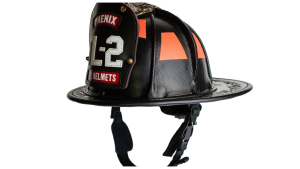
A leather fire helmet is a firefighter helmet constructed with a leather outer shell or a leather-based exterior design. Traditional examples are commonly associated with the distinctive helmet styles worn by firefighters throughout the history of organized firefighting.
The classic leather helmet is recognizable by its raised front shield area, traditional brim, sculpted profile, and decorative details. Depending on the manufacturer and model, it may include a leather shell, internal protective components, a suspension liner, an adjustable chinstrap, ear protection, reflective elements, and other accessories.
Historically, leather was used because it was a practical material that could be shaped into a durable helmet shell. Over time, manufacturers developed more advanced construction methods and incorporated additional materials to improve impact management, fit, and overall functionality.
Today’s leather fire helmets may combine traditional exterior styling with modern internal components. This allows manufacturers to preserve the familiar appearance of a leather helmet while incorporating contemporary design features.
It is important to understand that the term leather fire helmet does not automatically describe a single construction method or level of protection. Different manufacturers use different materials, components, and designs. The protective performance of a helmet depends on its complete construction, certification status, approved configuration, and proper use.
Why Do Firefighters Still Choose Leather Fire Helmets?
Despite the availability of modern composite and thermoplastic helmets, leather fire helmets remain popular throughout the fire service.
There are several reasons for their continued appeal.
A Strong Connection to Firefighter Tradition
The traditional leather helmet has been part of firefighting history for generations. Its distinctive appearance is closely associated with the development of professional fire departments and the evolution of firefighter protective equipment.
For many firefighters, wearing a leather helmet represents respect for the people who served before them. It is a recognizable symbol of the profession and the values associated with firefighting, including service, teamwork, courage, and commitment.
This historical connection is one of the most important reasons leather helmets remain desirable.
Distinctive Appearance
A traditional leather fire helmet has a recognizable appearance that differs from many contemporary helmet designs.
Its sculpted shell, traditional brim, front-facing profile, and decorative accessories create a look that many firefighters appreciate. Leather helmets are also available in different finishes and colors, allowing departments and individual firefighters to select a style that reflects their preferences and traditions.
Flat black is especially popular among firefighters who prefer a clean, understated appearance.
Handcrafted Character
Some leather fire helmets are manufactured using detailed craftsmanship and carefully finished exterior materials.
A well-made leather helmet can have a distinctive appearance because of the way its shell, finish, decorative details, and accessories come together. The craftsmanship is part of the product’s appeal, particularly for firefighters who appreciate traditional equipment.
However, handcrafted appearance should never be confused with proof of protective performance. Buyers should evaluate the helmet’s documented construction and certification separately.
Traditional Styling With Modern Components
Modern leather fire helmets can incorporate components that were not available in earlier generations of firefighting equipment.
Depending on the model, these may include:
- Modern suspension and adjustment systems
- Impact-management components
- Flame-resistant ear protection
- Adjustable chinstraps
- Goggles or compatible eye protection
- Reflective visibility elements
- Improved comfort padding
- Replaceable or adjustable internal components
This combination of traditional styling and contemporary design is one of the reasons leather fire helmets continue to attract attention.
What Is the Difference Between a Leather Fire Helmet and a Composite Fire Helmet?
One of the most common questions buyers ask is whether a leather fire helmet is better than a composite helmet.
There is no universal answer. Both types can be designed for professional firefighting applications, but they differ in materials, construction, appearance, weight, maintenance, and available configurations.
A leather helmet generally appeals to firefighters who prefer traditional styling and leather craftsmanship. Composite helmets typically use engineered materials designed for specific performance requirements and may offer a wider variety of contemporary shell designs.
The most important consideration is not which material looks better. It is whether the complete helmet model is appropriate for the firefighter’s duties and meets the applicable requirements.
Leather Fire Helmets
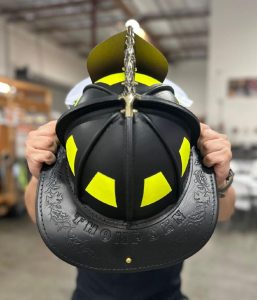
Traditional leather fire helmets are valued for their recognizable appearance, craftsmanship, and historical connection to firefighting.
Depending on the model, they may feature a leather exterior combined with internal protective components, a suspension liner, and modern accessories.
Potential advantages include:
- Traditional firefighter appearance
- Distinctive leather craftsmanship
- Classic design and styling
- Different color and finish options
- Compatibility with selected traditional accessories
Potential considerations include:
- The need for manufacturer-approved cleaning and care
- Model-specific fit and adjustment requirements
- Weight differences between designs
- The importance of verifying certification and approved configurations
Composite Fire Helmets
Composite fire helmets use engineered materials selected for their intended protective applications.
Their construction varies by manufacturer and model. Some are designed to provide a lightweight profile, while others emphasize particular impact-management or accessory features.
Potential advantages include:
- Contemporary construction methods
- A variety of shell designs
- Different suspension and adjustment systems
- Multiple accessory configurations
- Model-specific protective technologies
Ultimately, firefighters should compare complete helmet models rather than assuming that one material is automatically safer than another.
What Should You Look for When Buying a Leather Fire Helmet?
Choosing a leather fire helmet is an important purchasing decision. The helmet should fit properly, be suitable for the intended firefighting environment, and have documentation supporting its protective claims.
Here are several important considerations.
Shell Construction
The outer shell is one of the most recognizable parts of a leather fire helmet.
Traditional leather models may use vegetable-tanned leather or other leather materials selected for their appearance and manufacturing characteristics.
Vegetable tanning is a traditional leather-processing method that uses plant-derived tanning materials. It can produce leather with distinctive characteristics and a finish suitable for shaping and decorative work.
When evaluating a helmet, ask the manufacturer about the shell material, construction method, care requirements, and any limitations associated with its use.
Internal Protective Components
A leather exterior is only one part of a complete firefighting helmet.
The internal construction is also important. Depending on the model, a helmet may incorporate a protective dome, impact-management components, comfort padding, and a suspension system.
For example, the TL-2 Traditional Flat Black Leather Helmet is described as including a high-temperature thermoplastic dome and a closed-cell energy impact cap.
These components are part of the helmet’s overall design. Buyers should consult the manufacturer’s documentation to understand their function and the protective performance of the complete assembly.
Suspension and Fit System
A helmet that does not fit correctly can become uncomfortable and may not remain properly positioned during activity.
The suspension system helps secure the helmet on the firefighter’s head and allows the wearer to adjust its fit.
Look for a system that provides appropriate adjustment and is compatible with the manufacturer’s sizing instructions.
Some leather fire helmets offer nape straps, ratchet adjustments, or other fit-control options. The correct arrangement depends on the helmet model and the wearer’s requirements.
Chinstrap
The chinstrap helps keep the helmet positioned during movement.
A properly fitted chinstrap should be adjusted according to the manufacturer’s instructions. It should not be excessively loose or interfere with other protective equipment.
The TL-2 product description lists a Nomex webbing chinstrap with either a postman’s slide or combination configuration.
Buyers should confirm which version is included in the selected configuration.
Ear Protection
Ear protection is another important feature to examine.
Some traditional helmets include detachable earlaps designed to cover the sides and rear of the head and neck area.
The TL-2 description specifies black Nomex and fire-retardant cotton ear flaps measuring eight inches.
Before purchasing, confirm the exact material, dimensions, attachment method, and replacement availability.
Eye Protection
Firefighters need suitable eye protection for the tasks they perform.
Depending on the helmet design, compatible options may include goggles or other approved protective eyewear.
The TL-2 product description identifies goggles with a long strap and lists ESS FirePro or ATAC options.
Compatibility should be confirmed with the manufacturer. Buyers should also verify that the selected eye-protection equipment is appropriate for the intended application and applicable standards.
Reflective Visibility Elements
Reflective components can help make a firefighter more visible when illuminated by external light.
The TL-2 description lists eight 3M lime-yellow reflective tetrahedrons.
When comparing helmets, examine the location, attachment method, condition, and manufacturer-approved replacement options for reflective elements.
Weight and Balance
Helmet weight can influence comfort, especially when the equipment is worn for extended periods.
The TL-2 product description lists an approximate weight of 55 ounces, which is about 3.44 pounds or 1.56 kilograms.
Actual weight can vary depending on the selected configuration and accessories.
It is worth remembering that weight alone does not determine comfort. Balance, suspension adjustment, head shape, and the fit of other protective equipment also matter.
TL-2 Traditional Flat Black Leather Helmet: Features and Design
The TL-2 Traditional Flat Black Leather Helmet is presented as a traditional-style leather helmet combining a classic exterior appearance with a range of modern components.
Its flat black finish gives it a distinctive, understated look. The supplied product specifications also describe a leather shell, decorative filigree detailing, a thermoplastic dome, an impact cap, an adjustable suspension system, detachable earlaps, and several accessory options.
Here is a closer look at the listed features.
Vegetable-Tanned Leather Shell
The TL-2 is described as having a top-grade vegetable-tanned leather shell.
Vegetable-tanned leather is associated with traditional leatherworking methods and can be shaped and finished to create distinctive products.
For a leather fire helmet, the shell contributes to the helmet’s recognizable appearance and traditional character.
The presence of a leather shell does not, by itself, establish the helmet’s protective capabilities. Those depend on the complete assembly and the applicable certification documentation.
Flat Black Finish
The flat black finish gives the TL-2 a classic appearance without the shine of a glossy exterior.
Black has long been a familiar color in traditional firefighting equipment. A flat finish offers a more subdued visual style and complements the helmet’s traditional design.
The product description also identifies red, white, blue, yellow, black, and flat black among the available standard colors.
Availability should be confirmed with the seller when ordering.
Commemorative 9/11 Filigree Design
The TL-2 description includes a commemorative 9/11 filigree design.
Decorative details can give a traditional leather helmet a distinctive appearance and provide a way to recognize important moments in fire service history.
Because this is a commemorative feature, buyers should confirm the exact design and finish included with the helmet they intend to purchase.
American-Made Rising Phenix Finial
The product description lists an American-made Rising Phenix finial.
A finial is a decorative component associated with traditional helmet designs. It contributes to the helmet’s appearance and helps maintain its classic styling.
The specific material, attachment method, and care requirements should be confirmed through the manufacturer’s product information.
High-Temperature Thermoplastic Dome
The TL-2 is described as incorporating a high-temperature thermoplastic dome.
This is an internal construction component rather than simply a decorative feature.
The dome forms part of the helmet’s overall design. Buyers should refer to the manufacturer’s documentation for information about its material properties, construction, and role in the complete protective assembly.
Closed-Cell Energy Impact Cap
The product description also identifies a closed-cell energy impact cap.
Impact-management components are important parts of a helmet’s internal design. Their performance depends on the materials, construction, testing, and configuration of the complete helmet.
The impact cap should be maintained and replaced only according to manufacturer instructions.
Exclusive Phenix Suspension Liner
The TL-2 description lists an exclusive Phenix suspension liner with a custom comfort pad.
The listed adjustment range is 6½ inches to 7¾ inches. Extra-small and extra-large liners are available upon request, according to the supplied specifications.
A suspension liner is important because it helps position the helmet and allows the wearer to achieve a suitable fit.
Before ordering, check the sizing range and confirm that the selected liner is appropriate for the intended wearer.
Detachable Eight-Inch Earlaps
The helmet is described as including black Nomex and fire-retardant cotton ear flaps measuring eight inches.
Detachable construction can be useful when manufacturer-approved maintenance, inspection, or replacement is required.
The exact care instructions should be followed because cleaning methods that are unsuitable for protective materials can affect their condition.
Nomex Webbing Chinstrap
The TL-2 product details list a Nomex webbing chinstrap.
The available configurations are described as a postman’s slide or combination style.
The chinstrap should be adjusted to the manufacturer’s specifications and inspected regularly for damage, wear, or problems with its attachment points.
Goggles and Eye-Protection Options
The product description identifies goggles with a long strap and lists ESS FirePro or ATAC options.
The selected eye-protection configuration should be checked for compatibility with the helmet and other personal protective equipment.
Do not assume that every accessory combination is approved simply because individual components are available. Confirm the complete configuration with the manufacturer.
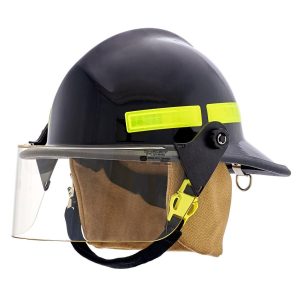
Eight Reflective Tetrahedrons
The TL-2 description includes eight 3M lime-yellow reflective tetrahedrons.
These elements provide reflective detailing intended to improve visibility when illuminated.
Their condition and attachment should be checked during routine equipment inspections. Damaged or missing components should be addressed using manufacturer-approved replacement parts.
Rear-Brim D-Ring
A D-ring is listed on the rear brim of the helmet.
A D-ring is an attachment feature, but its presence should not be interpreted as approval for lifting, climbing, fall protection, rescue, or other load-bearing applications.
Always follow the manufacturer’s instructions and use only attachment points specifically approved for the intended purpose.
Leather Fire Helmet Weight: Does It Matter?
Weight is one of the most frequently discussed features when comparing firefighter helmets.
A helmet that feels comfortable during a short fitting may feel different after several hours of use. Firefighters often wear helmets alongside breathing apparatus, protective hoods, coats, gloves, and other equipment. The combined weight and balance of this equipment can influence comfort and fatigue.
The TL-2 product description lists an approximate weight of 55 ounces.
That is approximately:
- 3.44 pounds
- 1.56 kilograms
- 55 ounces
However, helmet weight should not be considered in isolation.
A well-balanced helmet with an appropriately adjusted suspension system may feel different from a helmet with the same stated weight but a different center of gravity.
When possible, try the helmet with the protective equipment you normally wear. Confirm that it sits securely and does not create pressure points.
Be cautious with claims such as “the lightest leather fire helmet on the market.” Such a statement is a comparative marketing claim and should be supported by current, independent weight comparisons using equivalent configurations.
What Colors Are Available for Leather Fire Helmets?
Leather fire helmets are available in different colors, depending on the manufacturer and model.
The supplied TL-2 product information identifies these standard color options:
- Red
- White
- Blue
- Yellow
- Black
- Flat black
Some departments use helmet colors to identify rank, responsibilities, or operational roles. Other departments follow their own traditions and purchasing specifications.
Color alone does not establish a helmet’s protective performance or suitability. Buyers should confirm the available finishes and any department-specific requirements before placing an order.
Are Leather Fire Helmets NFPA Compliant?
This is one of the most important questions to ask before purchasing a leather fire helmet.
The product description for the TL-2 states that the helmet is compliant with current OSHA and NFPA requirements and refers to NFPA 1971.
However, buyers should not rely on a general marketing statement alone when evaluating a helmet for professional service.
NFPA 1971 was consolidated into NFPA 1970 in the 2025 edition of the standards. This means buyers should verify the applicable current standard and the certification status of the exact helmet model and configuration being purchased.
It is also important to understand that OSHA requirements and NFPA product certification are not interchangeable.
OSHA establishes workplace safety requirements. NFPA develops consensus standards for protective equipment. A product’s certification status should be supported by appropriate documentation from the manufacturer or relevant certification organization.
Before purchasing a helmet for operational use, ask for:
- The exact model and configuration covered by the certification.
- Documentation identifying the applicable standard and edition.
- Confirmation that the helmet is certified by an appropriate recognized organization, where required.
- Information about approved accessories and replacement components.
- Manufacturer instructions covering inspection, cleaning, maintenance, and service life.
A helmet should be selected based on verified documentation, not appearance or an unqualified claim of compliance.
How to Properly Fit a Leather Fire Helmet
A leather fire helmet should fit securely and comfortably according to the manufacturer’s instructions.
An incorrect fit can cause discomfort and may allow the helmet to move when the wearer bends, turns, or performs physical tasks.
Here are general considerations when checking fit:
Check the Sizing Range
Confirm that the helmet’s suspension system accommodates the wearer’s head size.
For the TL-2, the supplied product details list an adjustment range from 6½ inches to 7¾ inches, with extra-small and extra-large liners available upon request.
Confirm the measurement method with the manufacturer rather than assuming that a hat size and helmet measurement are interchangeable.
Adjust the Suspension
Follow the manufacturer’s instructions to adjust the suspension system.
The helmet should sit in its intended position without creating excessive pressure or instability.
Do not modify the suspension or use unapproved padding to force a better fit.
Adjust the Chinstrap
The chinstrap should be secured and adjusted as directed by the manufacturer.
Check that it does not interfere with the hood, protective clothing, or other equipment.
Check Compatibility With Other PPE
A firefighter’s helmet is only one part of a larger protective system.
Check how it fits with the hood, coat collar, breathing apparatus, eye protection, and any other equipment used during operations.
If a combination creates interference or prevents proper positioning, consult the manufacturer or department safety representative.
How to Clean and Maintain a Leather Fire Helmet
Proper maintenance is essential for keeping protective equipment in suitable condition.
Leather fire helmets may require care that differs from the cleaning routine used for composite helmets. The exact process depends on the manufacturer’s materials, finish, internal components, and cleaning instructions.
The following general practices can help support routine equipment care.
Follow the Manufacturer’s Cleaning Instructions
Always begin with the helmet manufacturer’s maintenance documentation.
Do not assume that a household leather cleaner, polish, solvent, or disinfectant is suitable for a protective helmet.
Some chemicals can damage finishes, adhesives, straps, reflective materials, or internal components.
Inspect the Leather Exterior
Check the shell for visible damage, cracking, unusual deformation, separation, or other changes.
Pay attention to areas around attachments and decorative components.
If the shell has experienced significant heat exposure, impact, or other potentially damaging conditions, remove the helmet from service until it has been evaluated according to the manufacturer’s instructions and department procedures.
Check the Suspension System
Inspect the suspension liner, adjustment points, comfort padding, and attachment areas.
Look for broken components, loose connections, worn material, or adjustment problems.
Do not use a helmet with damaged internal components until it has been evaluated and repaired or replaced as directed.
Inspect the Chinstrap
Check the chinstrap for fraying, damage, loose stitching, and problems with buckles or slides.
A damaged chinstrap should be replaced with an approved component.
Examine the Earlaps
Detachable earlaps should be checked for damage, contamination, and attachment problems.
Follow the manufacturer’s cleaning and replacement instructions for the specific materials used.
Check Reflective Components
Inspect the reflective tetrahedrons and other visibility elements.
Replace missing or damaged components only with manufacturer-approved parts.
Store the Helmet Properly
Store the helmet in a clean, dry location according to manufacturer recommendations.
Avoid unnecessary exposure to direct sunlight, extreme temperatures, moisture, and chemicals.
Do not store a helmet in a way that places excessive pressure on its shell or internal components.
How Long Does a Leather Fire Helmet Last?
There is no single service-life answer that applies to every leather fire helmet.
The appropriate service life depends on the manufacturer, model, applicable standard, inspection results, exposure history, maintenance, and department policies.
A helmet may require removal from service following significant impact, heat exposure, contamination, or visible damage. Even when the exterior appears acceptable, internal components may have been affected.
Firefighters should follow the manufacturer’s service-life guidance and their department’s inspection and replacement procedures.
Do not assume that a leather shell will remain safe indefinitely because it appears durable.
Can You Customize a Leather Fire Helmet?
Many traditional leather fire helmets offer different appearance and accessory options.
Depending on the manufacturer, customization may include:
- Shell color
- Finish selection
- Front shield design
- Decorative elements
- Approved finials
- Reflective components
- Goggles or compatible eye protection
- Chinstrap configuration
- Suspension and liner options
Customization should never involve unauthorized changes to the protective construction.
Before adding accessories, drilling holes, modifying attachments, or replacing components, confirm that the change is approved by the manufacturer and does not affect certification.
A helmet that looks attractive but has been modified outside its approved configuration may no longer meet the requirements for its intended use.
Who Should Consider a Traditional Leather Fire Helmet?
A traditional leather fire helmet may appeal to several groups.
Career Firefighters
Career firefighters may appreciate the traditional appearance and craftsmanship associated with leather helmets.
However, the helmet must meet the department’s purchasing requirements and be approved for the intended operational environment.
Volunteer Firefighters
Volunteer firefighters may value the connection between traditional leather helmets and the history of the fire service.
As with career firefighters, suitability, fit, certification, and department approval should come before personal preference.
Fire Departments
Departments considering leather helmets should evaluate the complete product specification, available sizes, accessory compatibility, maintenance requirements, certification documentation, and replacement-part availability.
Purchasing decisions should be based on operational needs and applicable requirements.
Collectors and Fire Service Enthusiasts
Traditional leather helmets also attract collectors and people interested in fire service history.
Collectors should distinguish between helmets intended for operational use, display pieces, commemorative products, and vintage equipment.
A helmet that is historically interesting or visually impressive is not necessarily suitable for firefighting.
Frequently Asked Questions About Leather Fire Helmets
The following questions address some of the most common searches and purchasing concerns related to leather fire helmets.
What is a leather fire helmet?
A leather fire helmet is a firefighter helmet featuring a leather outer shell or leather-based exterior construction. Traditional designs are recognized by their distinctive profile, brim, front shield area, and classic styling. Modern versions may combine traditional leather construction with contemporary internal components.
Why do firefighters wear leather fire helmets?
Some firefighters choose leather helmets because of their traditional appearance, craftsmanship, historical significance, and distinctive design. The helmet is also an important symbol of fire service identity. Operational suitability and verified protective performance should remain the priority.
Are leather fire helmets still used today?
Yes. Traditional leather-style helmets continue to be available and are used by firefighters when the selected model meets the relevant requirements for its intended application. Availability and acceptance depend on the manufacturer, certification, and department policies.
Are leather fire helmets safer than composite helmets?
Neither material is automatically safer in every situation. Protective performance depends on the complete helmet design, testing, certification, configuration, fit, and condition. Buyers should compare documented performance rather than choosing based on shell material alone.
What is a traditional leather fire helmet made of?
Construction varies by manufacturer. A helmet may use a leather shell alongside internal components such as a protective dome, impact-management materials, suspension liner, comfort padding, chinstrap, and ear protection.
What is vegetable-tanned leather?
Vegetable-tanned leather is leather processed using plant-derived tanning materials. It is a traditional leatherworking method used to produce leather with particular characteristics suitable for different products and finishes.
How much does a leather fire helmet weigh?
Weight varies by manufacturer, model, size, and accessories. The TL-2 Traditional Flat Black Leather Helmet is listed at approximately 55 ounces, or about 3.44 pounds. Buyers should confirm the weight of the exact configuration they plan to purchase.
Is a leather fire helmet comfortable?
Comfort depends on the helmet’s weight, balance, suspension design, adjustment range, padding, and the wearer’s head shape. A properly adjusted helmet may feel very different from one that is incorrectly fitted.
What size leather fire helmet should I buy?
Choose a size based on the manufacturer’s measurement and fitting instructions. Do not rely solely on a general hat size. Confirm the available suspension adjustment range and ask about alternative liners if necessary.
Do leather fire helmets have adjustable suspension systems?
Many modern models include adjustable suspension systems. The specific adjustment method varies by product. The TL-2 description identifies a Phenix suspension liner with a custom comfort pad and an adjustment range from 6½ inches to 7¾ inches.
Do leather fire helmets come with chinstraps?
Many models include chinstraps, but the design and material differ. The TL-2 product information lists a Nomex webbing chinstrap with postman’s slide or combination options.
What are helmet earlaps used for?
Earlaps are components designed to cover areas around the ears and sides of the head. Their material, dimensions, and protective role depend on the helmet design and applicable manufacturer documentation.
Can I replace the ear flaps on a leather fire helmet?
Replacement may be possible when the manufacturer provides approved replacement parts. Always confirm compatibility and follow the official replacement instructions.
Can I wear goggles with a leather fire helmet?
Some leather fire helmets are designed to accommodate compatible goggles or other eye-protection accessories. Confirm the approved accessory options for the specific helmet model.
What are reflective tetrahedrons on a fire helmet?
Reflective tetrahedrons are small reflective elements attached to the helmet. They can help make the helmet more visible when illuminated by external light. The TL-2 description lists eight lime-yellow 3M reflective tetrahedrons.
What is the D-ring on a leather fire helmet for?
A D-ring is an attachment feature. Its approved purpose depends on the manufacturer’s design and instructions. Do not assume that it is suitable for lifting, climbing, fall protection, or rescue loads unless the manufacturer expressly approves that use.
Are leather fire helmets waterproof?
Do not assume that a leather fire helmet is waterproof. Water resistance and permitted exposure depend on the construction, finish, accessories, and manufacturer instructions. Follow the official care and use guidance.
How do you clean a leather fire helmet?
Use only cleaning methods approved by the manufacturer. Avoid unapproved household chemicals, solvents, polishes, or cleaning products that may damage the shell or internal components.
How often should a leather fire helmet be inspected?
Inspection frequency should follow the manufacturer’s instructions and department procedures. Helmets should also be checked after potentially damaging events, including impact, unusual heat exposure, or contamination.
How long does a leather fire helmet last?
Service life varies by model, exposure, maintenance, inspection results, and applicable requirements. Follow the manufacturer’s service-life guidance and department replacement policy.
Are leather fire helmets NFPA certified?
Certification is specific to the exact helmet model and configuration. Buyers should request current certification documentation and confirm the applicable standard. A general product description is not a substitute for certification evidence.
Is NFPA 1971 still the current standard?
NFPA 1971 was consolidated into NFPA 1970 in the 2025 edition. Buyers should verify the current applicable standard and the certification status of the exact helmet they intend to purchase.
Does OSHA certify leather fire helmets?
OSHA establishes workplace safety requirements; it does not function as a general product-certification label for helmets. Buyers should distinguish OSHA requirements from independent product certification and ask for supporting documentation.
What colors are available for the TL-2 Traditional Flat Black Leather Helmet?
The supplied product description lists red, white, blue, yellow, black, and flat black as standard color options. Confirm current availability with the seller.
What is the approximate weight of the TL-2 leather fire helmet?
The supplied product specifications list an approximate weight of 55 ounces, equivalent to about 3.44 pounds or 1.56 kilograms. The final weight may vary with the selected configuration.
Does the TL-2 include a leather shell?
Yes. The supplied product information describes a top-grade vegetable-tanned leather shell.
What internal components are listed for the TL-2?
The product description identifies a high-temperature thermoplastic dome, a closed-cell energy impact cap, and a Phenix suspension liner with a custom comfort pad.
Can the TL-2 be ordered with different chinstrap configurations?
The supplied description lists a Nomex webbing chinstrap with postman’s slide or combination options. Confirm the selected configuration when ordering.
Is the TL-2 suitable for every firefighting environment?
No helmet should be assumed suitable for every application. Confirm the exact model’s certification, approved configuration, intended use, and department requirements before using it in operational settings.
What should I check before buying a leather fire helmet?
Check the exact model, certification documentation, fit range, shell construction, internal components, accessory compatibility, weight, replacement-part availability, maintenance instructions, and warranty. Ask the manufacturer or seller for clarification whenever a specification is unclear.
Important Buying Checklist for Leather Fire Helmets
Before purchasing a leather fire helmet, it is worth reviewing a few essential details.
Product and construction
- Confirm the exact manufacturer and model.
- Review the shell material and construction.
- Check the internal protective components.
- Confirm the helmet’s intended application.
Fit and comfort
- Verify the available sizes.
- Check the suspension adjustment range.
- Confirm the available liner options.
- Evaluate chinstrap adjustment and compatibility.
Accessories
- Check the included ear pads.
- Confirm eye-protection compatibility.
- Review reflective components.
- Verify approved attachment options.
Safety and documentation
- Request current certification documentation.
- Confirm the applicable standard and edition.
- Verify the complete approved configuration.
- Review inspection and service-life instructions.
Ownership and maintenance
- Check cleaning requirements.
- Confirm replacement-part availability.
- Review the warranty.
- Ask about repair and inspection procedures.
Taking time to review these points can help prevent confusion and ensure that the selected helmet matches the buyer’s actual needs.
The Importance of Buying From a Reliable Manufacturer or Supplier
A firefighter helmet is not an ordinary fashion accessory. It is part of a protective equipment system, and buyers should treat the purchasing process accordingly.
A reliable supplier should be able to provide clear product information, explain available configurations, identify approved accessories, and direct buyers to relevant certification and maintenance documentation.
Be cautious when a product listing uses broad phrases such as “fully compliant,” “the safest,” or “the lightest on the market” without supporting information.
Ask specific questions instead:
- Which exact model is being supplied?
- What standard and edition does the certification reference?
- Does the certification cover the complete configuration?
- Which accessories are approved?
- What are the inspection and replacement requirements?
- Are replacement liners, straps, and earlaps available?
Clear answers make it easier to compare products and make a responsible purchasing decision.
Final Thoughts: Is a Leather Fire Helmet the Right Choice?
A leather fire helmet combines a distinctive appearance with a long connection to firefighting history. Its traditional shape, leather craftsmanship, and recognizable styling continue to appeal to firefighters who appreciate the heritage of the profession.
Modern leather helmet designs can also incorporate contemporary components, including adjustable suspension systems, impact-management features, detachable earlaps, chinstraps, reflective elements, and compatible eye protection.
The TL-2 Traditional Flat Black Leather Helmet is one example of this approach. Its supplied specifications describe a vegetable-tanned leather shell, commemorative 9/11 filigree design, American-made Rising Phenix finial, thermoplastic dome, closed-cell energy impact cap, Phenix suspension liner, detachable earlaps, Nomex chinstrap, goggles, reflective tetrahedrons, and rear-brim D-ring.
Its flat black finish gives it a traditional appearance, while its listed accessories and internal components provide several features buyers may wish to evaluate.
Nevertheless, the most important decision should always be based on suitability, fit, condition, and verified protective performance. Before selecting any leather fire helmet for professional use, confirm its current certification, approved configuration, and compatibility with your department’s requirements.
A well-informed purchase is about more than choosing a helmet that looks right. It is about selecting equipment that is appropriate for the work, properly fitted, maintained according to instructions, and supported by reliable documentation.
For firefighters who value traditional design and craftsmanship, a leather fire helmet can remain a meaningful part of their equipment and their connection to the history of the fire service.
